

OpenAI expects annualized revenue to reach or exceed $70 billion by the end of 2026, driven primarily by enterprise demand. Revenue stood at approximately $50 billion at the end of September, requiring a sharp acceleration in the final quarter to meet the target.
The outlook helped ease concerns over AI demand and returns on massive infrastructure investments. Nasdaq 100 futures rose around 0.5% following the news, recovering some losses after Thursday’s selloff, when the Nasdaq Composite fell 1.3% and the S&P 500 declined 0.5%.
However, OpenAI’s path to profitability remains uncertain, with projected cumulative cash burn of $280 billion by 2030. The company is also reportedly discussing new funding at a valuation of approximately $1.4 trillion, as competition with Anthropic intensifies in enterprise software and AI-powered coding.
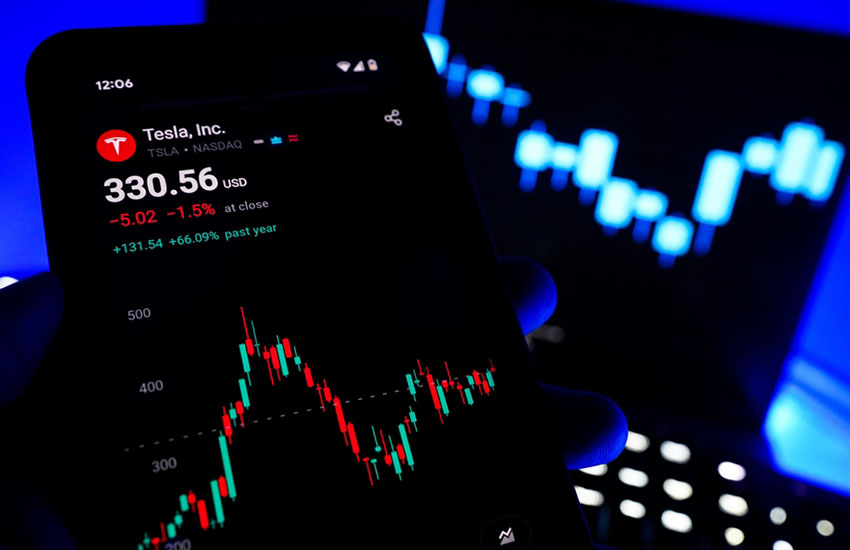
Tesla is pursuing new revenue streams through its Cybercab robotaxi, Full Self-Driving software and Optimus humanoid robots. The company delivered 486,532 vehicles in the third quarter of 2026, exceeding market expectations of approximately 462,000, although deliveries remained 2.1% below the previous year’s level.
Heavy investment continues to raise questions about Tesla’s financial outlook. The company reported negative free cash flow of $1.1 billion in the second quarter as capital expenditure more than doubled to $5.8 billion. Tesla expects capital expenditure to exceed $25 billion in 2026, funding AI infrastructure, robotics and manufacturing expansion.
The challenge is whether these investments can generate sustainable revenue and stronger margins. Regulatory hurdles, development costs and commercialization timelines remain key risks, while vehicle pricing and cash flow will help determine how much financial flexibility Tesla has to pursue its AI ambitions.
AI Investment Faces a Profitability Test
The sustainability of the AI trade increasingly depends on whether companies can generate adequate returns from their investments. OpenAI’s revenue outlook points to continued demand for AI services, while Tesla’s robotaxi and robotics initiatives offer potential long-term growth opportunities. However, rising capital expenditure without corresponding improvements in earnings and cash flow could prompt investors to reassess technology valuations.
OpenAI’s revenue target and Tesla’s AI expansion highlight a key question for financial markets: can AI growth translate into sustainable profits? Strong commercial demand and successful product launches could support the Nasdaq 100 and other technology stocks, while rising costs, delayed commercialization or disappointing earnings could trigger renewed selling. Traders should monitor corporate results, capital expenditure, Treasury yields and key technical levels to assess whether market optimism is sustainable. The balance between growth expectations and financial returns will remain a critical driver of sentiment across AI-related assets.