

MXN Peso close to the Key 17.10 Support Test

Some EM currencies are performing very well against the USD. This is the case, for example, with the South African ZAR, but even more so with some South American currencies such as the Mexican peso (MXN) and the Brazilian real (BRL).
The peso has returned to levels very close to those seen in 2023 and early 2024, when—after strengthening for four consecutive years—USDMXN reached a low of 16.26 and then spent several months trading around the 17 area. At yesterday’s close, the pair stood at 17.34, following a couple of positive sessions.
Mexico has sustainable public debt, a resilient financial system, historically high levels of foreign direct investment, and a strategic position within North American value chains. Continued nearshoring with the US and Canada, along with overall FDI inflows, drives strong demand for pesos, as companies convert dollars into pesos to pay workers and suppliers.
However, the carry trade remains the single biggest driver. Banxico has maintained a relatively high interest rate of around 7.00%, significantly above the US Federal Reserve’s rate of roughly 3.75%. This 3.25% yield gap makes Mexican assets attractive to investors, supporting the peso’s value.
In 2025, gains against the USD amounted to 13.57%, to which must be added a further appreciation of 3.52% this year.
TECHNICAL ANALYSIS
USDMXN has a technical setup similar to the one we saw a couple of weeks ago regarding USDNOK (which, incidentally, has since broken below the support floor we had identified around 9.45). It is also trading very close to a decisive support level at 17.10, which could act as a pivotal level around which to build trading strategies.
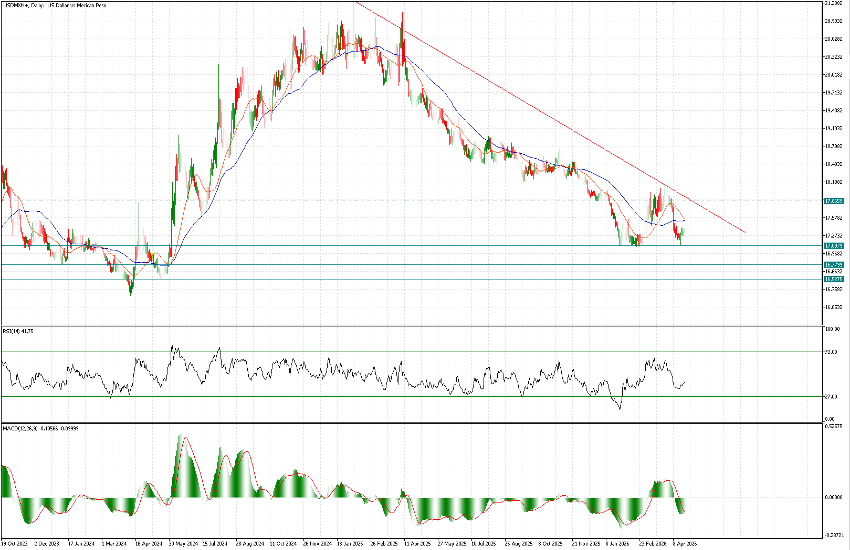
The other key level lies around 17.85, which is both a static resistance and the point where the current downtrend line now passes. Between these levels we find the 21-day and 50-day moving averages, currently at 17.56 and 17.53 respectively, both relatively flat.
The RSI stands at 41, while the MACD remains negative, although the histogram appears close to crossing to the upside.
In this case, however, we align ourselves with the broader USD weakness—not only against the aforementioned NOK, but also against another currency in the same geographic area, the BRL—and we note that in both cases recent lows have already been broken to the downside.
Clearly, these are different economies, but this increases our focus on the possibility of a further extension of the downward move. Should that occur, the main downside targets would be 16.78 and 16.53.