


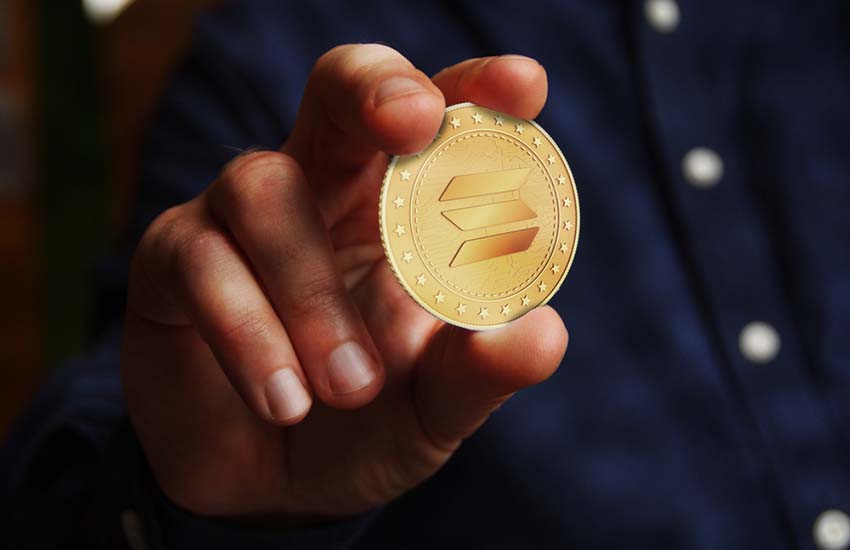
Solana is a cryptocurrency that was launched in 2020 and has been dubbed “The Ethereum Killer.” In this article, we will explain what Solana is and highlight its main features.
Since the launch of Bitcoin in 2009, the cryptocurrency sector has diversified with the emergence of new assets. Among these, Ethereum stands out as a game-changer, revolutionizing the industry with its 2015 launch and the introduction of blockchain technology alongside smart contracts. While Ethereum has solidified its position as the second-largest cryptocurrency by market capitalization, other digital currencies have gained traction. One such cryptocurrency is Solana, which entered the market in 2020 and has gained significant recognition in recent years.
What Is Solana?
Solana is an open-source platform designed to securely host scalable and decentralized applications. Created by Anatoly Yakovenko and launched in 2020, Solana shares several similarities with Ethereum, earning it the nickname “Ethereum killer.”
Like Ethereum, this network allows users to conduct transactions using its native cryptocurrency, SOL, which can be acquired on major blockchains and used as a real currency, similar to Ether, Ethereum’s native token. Additionally, Solana utilizes smart contracts, offering users enhanced security against cyber threats. However, Solana has significantly lower fees than Ethereum and processes transactions faster and more securely due to its innovative mining technology, which combines the Proof of History (PoH) system with the Proof of Stake (PoS) system.
By integrating these technologies, Solana can verify transactions more efficiently, ultimately handling a higher number of transactions per second than other networks. According to its white paper, Solana is estimated to process approximately 710,000 transactions per second. Since its inception, the network has steadily gained popularity, and by the end of 2023, its token, SOL, ranked as the fourth-largest cryptocurrency by market capitalization.
Origins of Solana
Solana’s origins trace back to 2017 when Anatoly Yakovenko, a former Qualcomm engineer, introduced a groundbreaking method to enhance blockchain network speed: the Proof of History (PoH) protocol. This algorithm assigns unique timestamps to each block added to the network, simplifying the validation of user transactions.
To bring this concept to life, Yakovenko partnered with Greg Fitzgerald, a former Qualcomm colleague, to develop a test network (Testnet) to evaluate the protocol’s feasibility. In February 2018, this Testnet was launched alongside the network’s official white paper.
Later that year, three more former Qualcomm employees joined the project, which was initially named Loom. However, to avoid confusion with another Ethereum-based initiative, the team rebranded it as Solana Labs. In the latter half of 2017, Solana Labs began securing funding to develop its network. By 2019, the team successfully closed a $20 million funding round with Multicoin Capital.
A year later, in 2020, Solana launched its trial version, supported by a public token auction on CoinList, raising nearly $1.7 billion. Since then, the network has continued to evolve, with its growing popularity backed by both Solana Labs and the Solana Foundation, a non-profit organization in Switzerland that provides essential funding for ongoing development.
Key Features and Pricing Factors
Solana operates in a competitive cryptocurrency landscape and stands out due to its unique features. Below, we explore why SOL prices fluctuate.
Hybrid Protocol
Solana’s most distinctive feature is its operational mechanism. It employs a combination of two methodologies: Proof of Stake (PoS) and Proof of History (PoH), an innovation developed by Solana Labs. The latter ensures an automated and efficient record of network transactions within an integrated system called History.
Solana’s Processing Speed
The Proof of History protocol allows Solana to verify transactions faster than other cryptocurrencies. Given the importance of speed in the crypto industry, this feature gives Solana a significant competitive edge.
Affordable Costs
Solana’s high transaction speed directly impacts network costs. Its transaction fees are relatively low and more affordable for users and developers. As a result, these low fees contribute to increased network adoption and the proliferation of decentralized applications.
The SOL Token Burns Over Time
Despite the creation of over 486 million tokens in total, the SOL token undergoes periodic burning, reducing its overall supply. This factor plays a crucial role in investment decisions.
Factors Affecting the Price of Solana
Like all cryptocurrencies, Solana is a highly volatile asset subject to market fluctuations. Several factors influence its price, though some exert a more significant impact than others.
Influence of Bitcoin
Bitcoin, the dominant cryptocurrency in the market, directly influences Solana’s price. Like many other digital assets, Solana’s value often fluctuates in response to Bitcoin’s market performance.
Popularity and Community Growth
As Solana gains recognition, its price appreciates. A growing and engaged community fosters greater adoption, increasing demand for Solana.
Development of Smart Contracts
Smart contracts play a crucial role in Solana’s network operations. Their advancement and continued innovation influence the perception of Solana’s value and, subsequently, its market price.
In summary, Solana is one of the most promising cryptocurrencies today, thanks to its unique combination of technology and foundational strengths. As the crypto industry evolves, understanding its functionalities and market dynamics is essential for those looking to enter the space.
Investing in Cryptocurrencies with OnEquity
Expand your portfolio with 15+ cryptocurrency CFDs.
- Trade popular cryptocurrency markets with up to 1:50 leverage on major cryptocurrency CFDs, including Bitcoin and Ethereum.
- Benefit from up to 1:50 leverage.
- No need to own a crypto wallet.
- Trade in any direction.
- Available 24/7, seven days a week.
Conclusion
To conclude, Solana has emerged as one of the most innovative and promising cryptocurrencies, offering advanced technology, rapid transactions, and low fees. Its efficient combination of PoH and PoS gives it a competitive advantage in the blockchain space, driving its exponential growth in adoption and momentum since its inception.
However, like all cryptocurrencies, its price remains highly volatile and is significantly influenced by Bitcoin’s price movements, community support, and ecosystem health. As blockchain technology continues to evolve and pivot toward more practical applications, Solana is poised to play a key role in shaping the future of the industry.