


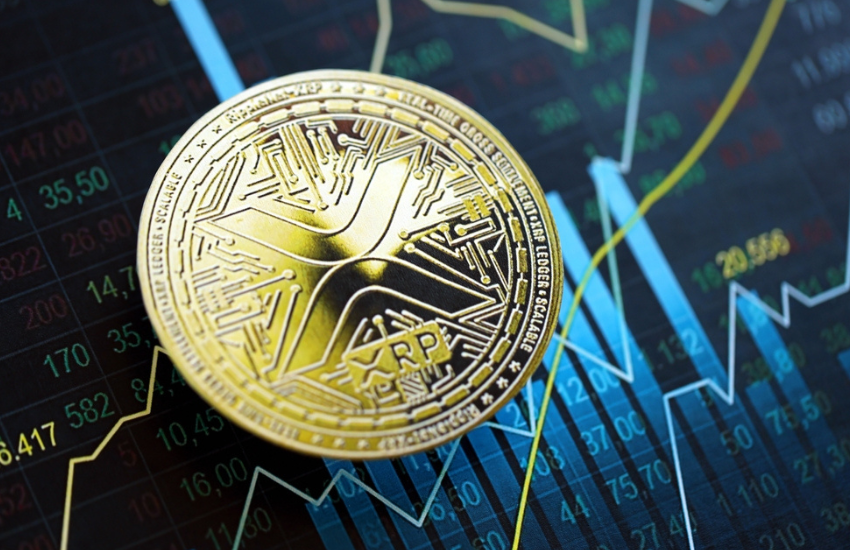
If you are looking to invest in cryptocurrencies but still do not know in-depth how to do it, or if you want to know more about the Ripple cryptocurrency, continue reading this article to learn more. While Bitcoin is at the top of the cryptocurrencies preferred by users, other digital currencies are also in the market, seeking to position themselves and offering completely different features. Right now, you will learn what Ripple is and how it works.
Ripple is one of those cryptocurrencies that has captured the attention of many in the world of cryptocurrencies due to the differences it presents compared to others. It is described as having a more decentralized value within a fully decentralized environment. Although Ripple was founded differently and operates uniquely, it is still considered a cryptocurrency. For this reason, it is advisable to research and learn more about it before investing.
What Is Ripple?
Ripple was founded by Ripple Labs in 2012 as a later iteration of Ripplepay and consolidated as the XRP cryptocurrency platform, the acronym used for its representation. Like most cryptocurrencies on the market, Ripple is built on the idea of a distributed network that requires several interested parties to validate transactions, eliminating the need for a centralized authority. However, Ripple has several differences from Bitcoin that must be considered. For example, the cost of making a transfer with Ripple is considerably lower, and transfers involving XRP are immediate, requiring little time for confirmation. Furthermore, XRP can be exchanged for fiat currencies and gold.
What Is the Difference Between Ripple and Bitcoin?
Bitcoin uses blockchain technology, while Ripple uses a distributed consensus ledger that operates with a network of operators responsible for validation and XRP crypto tokens. The main objective of Ripple is to be a digital currency used to pay for goods and services, serve as a payment system, exchange currency, and send payments to banks and other networks. Ripple’s concept is to create a platform for the direct transfer of assets in real-time, such as gold or traditional money. At the same time, it seeks to become a cheaper, safer, and more reliable alternative to the current bank transfer systems, such as SWIFT.
How Does Ripple Work?
Currently, Ripple has remained stable since its market launch. Ripple can handle 1,500 transactions per second and has been upgraded to increase to 50,000 transactions per second, while Bitcoin handles between 3 and 6 transactions per second. As far as mining is concerned, Ripple’s XRP cannot be mined like Bitcoin, Ethereum, Litecoin, or other cryptocurrencies. XRP issued its total supply at launch, so it does not require mining to increase its market supply. More and more payment providers and banks are including Ripple in their operations, and it is intended for both companies and person-to-person use, even if that is not its primary objective. Ripple’s goal is to move large amounts of money globally as quickly as possible.
What Is XRP?
The actual cryptocurrency used by the Ripple network is known as XRP. This cryptocurrency simplifies transfers between different currencies. For example, current settlement systems use US dollars and possibly other fiat currencies to perform conversions, a process involving several fees and taking approximately three days to complete, even longer if the bank transfer is international. With Ripple, the value of the transfer is first converted into XRP instead of USD, eliminating currency exchange fees as the payment is processed in seconds.
Ripple issued close to one hundred billion XRP tokens, which seems to be the total number in existence for now. However, if needed, more tokens can be created. Ripple’s platform uses a hub-and-spoke design for XRP, positioning it as a fungible tool alongside other currencies or digital assets. XRP can settle a payment in just three seconds, making it available for use immediately. It is important to note that XRP is not dependent on the Ripple network; its tokens are completely independent. Banks using Ripple do not require XRP to transfer dollars or euros, preventing small investors from losing value when buying the token.
Additionally, Ripple now has a feature that allows it to release a billion XRP each month through a smart contract system. This can be used to incentivize customers, make sales to accredited investors, and fund trades on a commercial level. Unused XRP is added back to the escrow.
Why Invest in the World of Cryptocurrencies?
When analyzing where to invest your savings to increase them, cryptocurrencies have become one of the assets that have earned a place as an alternative. The rise of this novel option is related to various factors, primarily the advancement of digital technologies, which created the need for money that offers the same characteristics as digital transactions. This is where digital currencies found their place as a source of investment and business.
Conclusion
Overall, Ripple’s emphasis on fast and low-cost international transactions, its unique consensus algorithm, and the specialized role of cryptocurrencies like XRP distinguish this project from others. Ripple positions itself as a shining solution to the challenges facing traditional financial systems by leveraging blockchain technology. Ripple strives to make global money transfers more accessible, efficient, and secure, transforming how money is sent and received internationally.